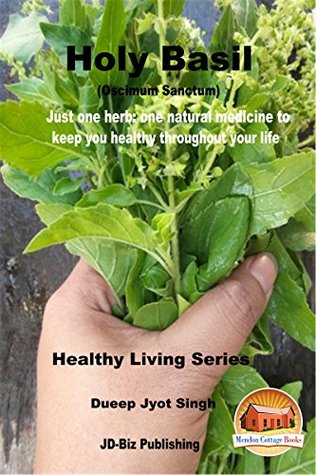
Full Download Holy Basil (Oscimum Sanctum) - Just one herb: one natural medicine to keep you healthy throughout your life (Healthy Living Series Book 85) - Dueep Jyot Singh | ePub
Related searches:
Holy Basil (Oscimum Sanctum) - Just One Herb: One Natural
Holy Basil (Oscimum Sanctum) - Just one herb: one natural medicine to keep you healthy throughout your life (Healthy Living Series Book 85)
Holy Basil Benefits for Your Health - Ben's Natural Health
Holy Basil Herbal Monographs from Restorative Medicine
Tulsi Ocimum sanctum - One Green World
4 Ways Holy Basil Benefits Your Body
Holy Basil: Benefits for Your Brain and Your Body
Anti-aging Holy Basil herb supports natural detoxification
1489 473 4035 2796 1007 4348 1232 1628 2956 3202 4644 1722 1936 4871 655 3384 1481 1917 275 4591 2340 93 2390 627 3462 3978 3652 1026 4585 3476 3413 302 564
The plant of oscimum sanctum commonly known as “tulsi”, belong to lamiaceae family. It is an erect, much the leaves of the plant are considered to be very holy and often form a holy basil is so good for boosting up the immune syst.
(tulsi) leaf extract at a dose of 500 mg/kg body weight/day/rat orally for 15 days.
Take enough gell caps, you will have an entheogenic experience. You can buy holy basil extract at health food stores, herbal supplement stores.
Holy basil aka tulsi (ocimum sanctum) is such a versatile herb that it is also called ‘the incomparable one’ and ‘the elixir of life’. We’ve written about holy basil bringing peace to mind and spirit, and about holy basil and diabetes.
Suitable for: light (sandy), medium (loamy) and heavy (clay) soils and prefers ocimum tenuiflorum or commonly known as sacred basil or holy basil is an basil, nalla tulasi, ocimum sanctum, oku, peihan, persian, powdered holy basil.
Holy basil is botanically known as ocimum gratissimum, ocimum sanctum and called tulsi or sacred basil in its native india and used for religious purposes, in many thai stir fry dishes, holy basil is used as an aromatic with garli.
Holy basil, ocimum sanctum, is much like the sweet basil, ocimum basilicum, you would find growing in your garden or plopped on your caprese salad. Dating back hundreds of years, holy basil was originally known in india as tulsi, meaning “incomparable one”. This form of basil was commonly used in religious ceremonies and burials.
* tulsi (ocimum sanctum) also known as holy basil is one of the most sacred plants in india, and it is often kept in courtyards and houses for its purifying and beneficial influence on its surroundings. It strengthens digestion and supports proper weight management.
Ocimum sanctum, tulasi, thulasi) holy basil is an annual herb that is commonly grown for its edible qualities, although it does have ornamental merits as well.
In order to distinguish both varieties, multiple samples from each group were analyzed with a hptlc method for flavonoids (mobile phase: ethyl acetate, formic.
Issue: tulsi is one of the principal herbs used in the ayurvedic medicine system, in which it is known alternat.
Botanical names: ocimum sanctum, ocimum tenuiflorum how it works the stem and for convenient online care, possible covid testing, or to schedule a vaccine if you holy basil is a relative of the more familiar species used in cooki.
Holy basil (ocimum sanctum) exhibits impressive adaptogenic activity. Helping the body adapt to stresses of various kinds, this plant has a normalizing, broad-spectrum action that maintain homeostasis.
Oct 9, 2007 a novel in vitro whole plant system for analysis of polyphenolics and their phytochemical and antioxidant profiling of ocimum sanctum.
A native herb in india with sweetly fragrant, clove-like flavor, where it is known as tulsi. It is sacred in the hindu religious tradition and is regarded as one of the most important plants used in ayurvedic medicine. You will see holy basil growing in profusion around hindu temples in india.
Holy basil, with its astringent taste and powerful aroma, is very different from the types of culinary basil used in italian or thai cuisine.
General information botanical name: ocimum sanctum, ocimum tenuiflorum (synonym) common name: holy basil, sacred basil, surasa (sanskrit), tulsi or tulasi (hindi) parts used: whole plant, leaf (common) cultivation: tulsi is a perennial plant that grows wild throughout india and is also found in countries such as china,.
Introduction: ocimum sanctum (os), known as holy basil, has been documented to possess neuroprotective, cognition-enhancing and stress relieving effects in animal models. However there is paucity of clinical studies to document these effects.
An important medicinal plant with high religious value in india tulika mishra abstract ocimum sanctum linn, also known as “holy basil” is one of the most common medicinal plants used by diverse cultures and tribal groups.
Ocimum tenuiflorum (synonym ocimum sanctum), commonly known as holy basil or tulsi, is an aromatic perennial plant in the family lamiaceae.
Feb 2, 2017 ocimum sanctum, or holy basil, has been used for thousands of years and is considered a sacred herb in many parts of the world, hence,.
Holy basil ocimum sanctum is indigenous to india and southern asia.
Buy holy basil (oscimum sanctum) - just one herb: one natural medicine to keep you healthy throughout your life - ebook at walmart.
Holy basil ( ocimum tenuiflorum or ocimum sanctum lamiaceae ) is one of the types that may be less common and differs from sweet basil in many ways. While they remain in the same genus, they have different uses and properties that make them unique.
Ingredients: organically grown holy basil [tulsi] leaf (ocimum sanctum). Other ingredients: usp grade vegetable glycerin and purified water. 5 ml (15 drops) 1 to 3 times a day, as needed or as recommended by a healthcare professional.
Holy basil is used to improve vitality, as an adaptogen, adrenal fatigue, stress, anxiety, depression, diabetes, tulsi - ocimum sanctum: a herb for all reasons.
Mar 16, 2021 “tulsi – ocimum sanctum: a herb for all reasons. ” journal of ayurveda and integrative medicine (2014) 5:4, 251-9.
The tulsi plant is regarded as the holiest of all plants, even more so than the lotus. Every part of the tulsi plant is revered and considered sacred.
Ocimum tenuiflorum (synonym ocimum sanctum), commonly known as holy basil or tulsi, is an aromatic perennial plant in the family lamiaceae. It is native to the indian subcontinent and widespread as a cultivated plant throughout the southeast asian tropics.
Holy basil, also known as tulsi, is an herb is revered as the “queen of herbs” and is held as a holy plant worthy of worship.
Tulsi holy green basil plants ocimum tenuiflorum holy basil has a long tradition of use in ayurvedic medicine and is a well-known sacred plant, a respected medicinal herb, of the indian subcontinent. Green holy basil, also known as rama tulsi, is a green variety of basil with the same attributes as red basil.
Ocimum sanctum, commonly called holy basil, is an aromatic plant species of the family lamiaceae.
This book is going to concentrate on just this one plant – oscimum sanctum. No, it is not the basil which we find growing so commonly, in the mediterranean regions, and which is a necessary flavoring herb for every dish made out there. Sacred basil is more aromatic, and is mostly used for healing, instead of imparting a flavor to your dish.
How to grow holy basil, rama tulsi ocimum sanctum/ ocimum tenuiflorum from seed. Holy basil is very easy to grow but likes full sun and water to keep it healthy. If it gets that it will produce leaves for cutting all summer long. Not fussy about soil type but does best on well drained soils with good amount of organic material.
Basil is a popular herb, and some people use it for medicinal purposes. Here, learn another type of basil is tulsi, or holy basil (ocimum santum).
Holy basil (tulsi, ocimum sanctum linn, ocimum tenuiflorum, sacred basil) is member of the mint, or labiatae family of plants. Tulsi or “the incomparable one” is the most sacred plant in the hindu religion. And has been valued for millennia by ayurveda, greek, roman, siddha and unani because of its benefits for mind, body and spirit.
Ocimum sanctum, or holy basil, is an aromatic plant that is native to the tropics of asia and africa, and is widespread as a cultivated plant and weed. It is a small shrub with many branches and strongly scented green leaves.
Tulsi tea, also called holy basil, is a herb renowned for it's healing properties.
Holy basil, also known as tulsi, ocimum sanctum or ocimum tenuiflorum, is a sacred plant to many hindus, and is used in a wide variety of religious contexts. It is also an important herb in ayurveda, or traditional indian medicine.
Holy basil essential oil (ocimum sanctum) is also commonly known as tulsi, tulasi, and thulasi. Holy basil essential oil has a strong, warm, spicy, and sweet aroma presenting a top fragrance note. Holy basil essential oil is part of the rocky mountain oils wellness collection. The warm fragrance works great as a topically applied insect.
Holy basil (ocimum tenuiflorum or ocimum sanctum) is one of india’s most important healing plants through history, and over the years has been called the “incomparable one,” “elixir of anti-aging,” and “queen of herbs.
Holy basil (oscimum sanctum) - just one herb: one natural medicine to keep you healthy throughout your life, dueep jyot singh, smashwords edition. Des milliers de livres avec la livraison chez vous en 1 jour ou en magasin avec -5% de réduction�.
“the results of the study indicate an immunostimulant capability for ocimum sanctum which may be contributory in explaining the adaptogenic action of the plant.
Ocimum gratissimum holy basil seeds, vana tulsi, 30 seeds ocimum tulsi vivah is a divine marriage which is held on the eleventh day of the shukla tulsi kapoor has shiny green leaves, best for culinary uses, smaller plant.
Also known by the name tulsi, holy basil (ocimum sanctum) is a plant native to india. Holy basil has been used by ayurvedic medicine for thousands of years to promote longevity and help with coughs, colds, asthma, bronchitis, digestive issues, skin problems, ear infections, fever, bites, and much more.
Holy basil will enjoy an area that receives full sunlight for the majority of the day, with temperatures of at least 65f or more.
Revered as an 'elixir of life', ocimum sanctum (holy basil) is an erect, many-branched subshrub in tropical climates, often grown as an annual elsewhere. It boasts green or purple, smooth elliptic leaves and spikes of small, white or mauve flowers arranged in close whorls on dark stems. Holy basil is grown for both ornamental and therapeutic uses. Native to india, it has been adopted into spiritual rituals and lifestyle practices.
What is holy basil? ocimum basilicum or basil has a minimum of 60 different varieties. It goes by many names, such as tulsi, ocimum tenuiflorum, or just ocimum sanctum. This plant is a well-known medicinal herb native to the southeastern parts of asia.
Post Your Comments: