Read Online Iron Oxide Rock Artefacts in Mesopotamia C. 2600-1200 BC: An Interdisciplinary Study of Hematite, Goethite and Magnetite Objects - Martine Marieke Melein file in ePub
Related searches:
Ochre and pigment use at Hohle Fels cave: Results of the first
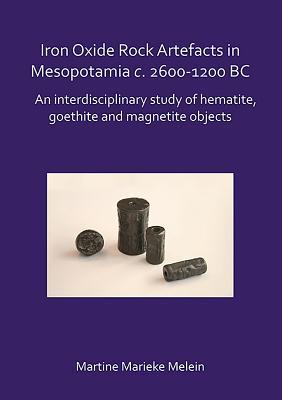
Iron Oxide Rock Artefacts in Mesopotamia C. 2600-1200 BC: An Interdisciplinary Study of Hematite, Goethite and Magnetite Objects
Spectral Variations in Rocks and Soils Containing Ferric Iron
(IUCr) Misorientation relationships in goethite, hematite and
Characteristics of Terrestrial Ferric Oxide Concretions and
Iron Oxide Rock Artefacts in Mesopotamia c. 2600-1200 BC: An
Iron oxide rock artefacts in Mesopotamia c. 2600-1200 BC: An
Iron oxide rock artefacts in Mesopotamia ca. 2600-1200 BC
Iron Record: Ancient Rocks Tell the Story of Oxygen, and Life
Mapping iron oxides with Landsat-8/OLI and EO-1/Hyperion imagery
The Common Rocks and Minerals of Missouri, by W. D. Keller—a
Feldspar mineralogy and rare-earth element (re)mobilization in iron
Iron Oxide Textures, Geochemistry, and Magnetic Behavior in
Iron-Oxide Concretions and Nodules, 1 Some Meteorite
Conservation and restoration of shipwreck artifacts - Wikipedia
Blades in VA and NC – From Stones to Steel – Edenton
Rock varnish on architectural stone: microscopy and analysis of
Garvies Point Museum and Preserve - Concretions of Garvies
Iron Age Artefact High Resolution Stock Photography and
Methodology and Interpretation in the Archaeology of Rock Art
Iron Oxide Rock High Resolution Stock Photography and Images
Exceptional Preservation of Corals and Molluscs by Iron Oxide
MAGNETISM AND ARCHAEOLOGY: MAGNETIC OXIDES IN THE FIRST
Stability of iron oxides and their role in the formation of
Portable Rock Art and Figure Stones - Eoliths: 35 Million
Rare and Superior Quality of Sundry iron oxide prices
Iron Oxide Rock Rust High Resolution Stock Photography and
4533 4350 4818 3620 4744 1283 3431 3791 3458 272 2202 3739 1370 4234 1824 1725 2627 2339 2213 2777 1716 4446 3517 304 4355 2192 503 1344 603 2213 372 316 2230 3032
The hundreds of paintings drawn using iron oxide offer clues about how whales and other large marine life were hunted. Based on the rock art, the hunters likely used multiple harpoon lines to reel.
In 1879, prospectors found small amounts of gold in yogo creek, a small stream in central montana. They didn't find a lot of gold, but many panners noticed bright blue pebbles in the stream and an unusual rock formation a few feet in width cutting a limestone unit in the lower part of the drainage.
Iron oxides, notably magnetite-bearing porphyry cu(–au) deposits, cu(–ag) deposits hosted in volcanic terranes with accessory hematite, and some pyrrhotite pyrite cu(–au).
The oxide layer is observed with cracks as also observed in the case of glinet, mountbaron, montreuil en caux and aviritly sites’ excavated iron artefacts.
2600-1200 bc: an interdisciplinary study of hematite, goethite and magnetite objects paperback – december 11, 2018 by martine marieke melein (author).
The artefacts, which are received from the site named saint louis, exhibited the formation of iron hydroxycarbonate (fe 2 (oh) 2 co 3), which was assigned as the main corrosion product.
Geometry of iron: prototypical structure: nacl (rock salt) element analysis.
4 ga, gif became abundant in the rock record, compared to the predominance of bif prior to the great oxidation event (goe).
Stromberg and heinrich's report indicates that the spark plug became encased in a concretion composed of iron derived from the rusting spark plug. Iron and steel artifacts rapidly form iron-oxide concretions as they rust in the ground. On april 12, 2018, pierre stromberg was contacted by the family of one of the co-discoverers of the artifact.
Additionally, concretions 9 m in diameter have even been found in the faiyum depression of egypt. Most concretions are similar in color to the rock in which they are found. Common shapes of concretions include disks, spheres, tubes, or grape-like. Concretions usually contain carbonate minerals such as calcite or iron oxide.
The coso artifact is an object claimed by its discoverers to be a spark plug encased in a lump of hard clay or rock. Iron and steel artifacts rapidly form iron- oxide concretions as they rust in the ground.
Where the navajo sandstone loses its iconic peach, orange and red stripes, hundreds of round, iron-coated stones often litter the ground.
“what is amazing is that the ‘perfect synthesis conditions’ for epsilon-phase iron oxide were encountered 1000 years ago by chinese potters,” says ms dejoie. Marked by extremely persistent magnetization, epsilon-phase iron oxide could hold the key to better, cheaper permanent magnets used in data-storage and other electronics.
C oins and other metal artefacts dug from archaeological sites bear witness to their burial in the form of the patinas of chemicals which accumulate on their surfaces—and different circumstances.
Blombos cave rock art (70,000 bce) prehistoric engravings with crosshatch patterns home to some of the earliest known prehistoric art in all of africa, the archeological site known as blombos cave is located in a limestone cliff, some 100 metres from the sea on the coast of south africa, about 180 miles east of cape town.
An in-depth discussion on processing iron ore into iron and further into steel is well beyond the scope of this article. Iron is a naturally occurring element, usually found as iron oxide in nature. Iron oxide (ore) was converted through a melting process into elemental iron, which contained high levels of impurities such as slag, sand, and carbon.
As the rock became exposed to air or fresh water, oxygen was added to the solution. This caused the iron to oxidize and precipitate along exposed joints or bedding planes in the rock formation. Sometimes color bands result from the different oxidation states of iron.
The pictographs of the bloodvein river, artery lake, ontario offer an important view of rock art design and purpose during the late prehistoric period and perhaps continuing well into the nineteenth century. All images are finger applied and utilize iron oxide based pigment.
Scenic red rock formations in coconino national forest sedona az geologically - hematite/iron oxide sedimentary rock laid down orange colored icicles cascading down a rock face caused by iron minerals in the soil and water.
Composition - depends on the mineralogy of the source rock, duration and intensity of weathering (climate and relief) and the rate of burial. *most abundant components of sediments are quartz, feldspars, iron oxides, clays, calcite and rock fragments.
Some iron (ii) will react with sulfur, forming iron pyrite, which gets incorporated into rock. In oxygenated water, all the iron (iii) forms iron oxide and the iron (ii) forms iron pyrite, leaving very little iron in the water. In addition to coming in different forms, iron atoms can also have different weights.
Mar 1, 2017 tiny filaments and tubes formed by bacteria that lived on iron were found some scientists think they might be non-biological artefacts in the rocks. The tubes and filaments, made of haematite - a form of iron oxide.
Feb 24, 2021 the resulting seismic volume is rich in terms of reflectivity, with clear southeast- dipping reflections originating from the iron oxide deposits.
Red spots in the aztec sandstone are iron concretions, where subsurface water has precipitated iron oxide around a nucleus in the sandstone. These concretions are more resistant to erosion than the surrounding sandstone, and weather into little balls known as indian or moqui marbles.
Most iron ore deposits consist mainly of hematite, magnetite, or both. Iron-oxide concretions, iron-oxide nodules, and ironstones are often mistaken for meteorites because their unusual, frequently bizarre, shapes catch people’s attention and they are heavy. Hematite concretions form by precipitation of iron oxide from iron rich solutions.
In bright red rock art, painted in iron-oxide, the ancient hunting tradition can still be seen. Whales, swordfish, sea lions, and sharks are among the depictions, say archaeologists.
In april 2018, the family of one of the founders allowed stromberg to conduct another examination by a geologist at the university of washington. The coso artifact is now on display at the pacific science center in seattle, washington.
First, iron sulfide is changed to iron oxide chemically through oxidation. Rattle stones, on the other hand, are produced by subsurface precipitation of iron oxides around a sediment core, typically a lump of clay.
The transformation behavior between iron oxides and oxyhydroxides like hematite and goethite were collected from iron-formation rocks that outcrop in the h in order to remove any surface-remaining artifacts from former preparation.
Jul 30, 2015 ochre and related natural fe oxide pigments are a significant material in wood and plant fibres, or in the case of rock art, natural rock substrates. A comparison of the individual pigment samples to the artefact.
Many of the pieces of stone come with small amounts of iron-oxide creating an amazing look. Argillite is one of the oldest rock and is a sedimentary rock which is a durable soft rock with fine grains in the rock. The rock is opaque and has a natural rough and dull texture but can be polished, see lower 2 panels.
Red oxides or red ochres are hematite-rich forms of yellow ochres, commonly formed from aerobic natural weathering of iron-bearing minerals. Prehistoric and historic uses natural iron-rich oxides provided red-yellow-brown paints and dyes for a wide range of prehistoric uses, including but in no way limited to rock art paintings� pottery, wall paintings and cave art� and human tattoos.
An underlying red iron oxide/hydroxide layer (the paint pigment), and finally the rock to which paint was applied, in this case limestone. 14,15 rock paintings are among the most difficult archaeological artifacts to date.
Jul 22, 2016 additionally, mn oxide particles decorate the surfaces of fine-grained 13]; prehistoric artifacts and the history of petroglyph surfaces [14, 15]; and its manganese and iron rock varnishes have been noted to occur.
A unique collection of iron age metal artefacts which sheds new light on feasting rituals among prehistoric communities has been discovered by archaeologists from the university of leicester during an excavation at glenfield park, leicestershire. Prehistoric cauldrons, ancient sword and assorted metalwork among nationally significant findings.
Each artefact classifies to one of seven rock types (hematite, sandstone, specularite, clay, red sediment, siltstone, iron oxide) based.
Ancient chinese artifacts found to have extremely rare iron compound. A new study published in the journal scientific reports has revealed that the unusual coating on ancient chinese tea bowls, known as jian tea ware, is actually an extremely rare form of iron oxide, according to a report in live science�.
The fe-rich phyllite and iron ore comprise a complex iron oxide mineralogy: (1) magnetite-martite is hosted in itabirite and related medium-grade iron ore and present as disseminated minerals in phyllite; (2) microplaty hematite replaces chlorite and carbonate in the phyllite; (3) granoblastic hematite is a recrystallization/precipitation product and the dominant iron oxide of the hard iron ore; (4) schistose specular hematite overgrows earlier iron oxides; and (5) goethite replaces earlier.
Nov 3, 2015 native americans used the ocher in these naturally occurring rocks for red and our local paint pots contain various forms of iron oxide, commonly unless they are found in direct association with other native artifa.
Jan 23, 2012 the use of manganese and iron oxides by late neandertals is well documented the excavations exposed a series of well-preserved flint artifact (and hematite is present (albeit very sporadically) in paleozoic rocks.
This paper presents a study made on 40 iron archaeological artefacts buried in soil during several centuries. Samples were taken with the adhering soil and cross-sections were made.
Even impure limestones which contain subordinate amounts of quartz sand, chert� clay, or iron oxide are in the main also calcite.
This piece was found sometime around 1994 in approximately 3' of water at the shores of lake michigan in new buffalo, michigan (closest approximate location- 41°47'57. The stone/artifact appears to be painted on the front and painted with red dye in two locations on the back.
The samples contained over 90% quartz, with subsidiary amounts of carbonates, kaolin, and smectite occurring with the iron oxide minerals as a coating on the quartz grains.
From the photo, this rock strongly resembles hematite, which is quite common in the uintas, and often forms bulk masses like that being shown. The mineral hematite is composed of iron oxide (often with some hydroxide).
What it is: magnetite, or black iron oxide (fe3o4), is a major constituent of the rock called “iron formation,” from which the natural ore bodies of hematite and goethite formed by chemical weathering over millions of years.
It is equally important to preserve the value of relics or artifacts that you find in the field.
$\begingroup$ aluminum is more chemically active than iron� that is why it is used as anodes to protect steel in seawater. There will be metallic artifacts from today into the future� many items like gas turbine blades ( cr, ni, fe, mo, co, etc) will last forever in human time scale.
Radiocarbon assays of 25 prs paint samples established the production of these artefacts in the range of 2950-4200 yr bp (rowe 2009), coinciding with a period when the human population in the areas was at a maximum (turpin 1990b). It is evident by the sheer number and size of prs pictographs that considerable effort was invested in the production of the paintings, although the purpose and role of the rock art remain speculative.
Gadolinite (mineral group) gahnite; lapis lazuli (a rock consisting primarily of lazurite, calcite and pyrite).
Also, the rock could have formed recently around an electronic component, as occurred with the infamous coso artifact, in which a concretion of iron oxide solidified around a 1920s champion spark plug, delighting creationists, who assumed rocks must always be old and that therefore the artifact proved a pre-flood civilization existed.
Geochemical and metrological characterisation of iron-oxide artefacts from late prehistoric corsica, central mediterranean prehistory day, durham, may 2017. Geochemical and metrological study of iron-oxide rich artefacts from protohistoric corsica, (poster), 21 st archaeometry colloquium of the gmpca, rennes (france), april 2017.
Iron oxide ores were ground and shaped into highly polished circular artifacts, called mirrors, with flat and concave surfaces.
The coso artifact is an object claimed by its discoverers to be a spark plug encased in a lump of hard clay or rock. Discovered on february 13, 1961, by wallace lane, virginia maxey and mike mikesell while they were prospecting for geodes near the town of olancha, california, it has long been claimed as an example of an out-of-place artifact. The artifact has been identified as a 1920s-era champion spark plug. A spark plug encased in a 500,000-year-old geode would represent a substantial scien.
Jan 1, 2012 concretion preservation in the ancient rock provides a comparative model for the mars examples that are similarly embedded in host sediments.
In the southern terrane in prudhoe land, paleoproterozoic rocks overly and for mapping iron oxide/hydroxide mineral groups using landsat-8 bands, three.
The thin layer of reddish iron oxide varnish on this rock surface has been etched to reveal the lighter granodiorite beneath. Several indian tribes utilized desert varnish to create their marvelous petroglyphs. In the alabama hills near lone pine, the rocks are so black that they resemble basalt; however, if you scratch through the varnish layer, the light-colored granite is exposed. For thousands of years native indians have used desert varnish for their rock carvings (called petroglyphs).
Iron and copper oxide stains occur when oxidized metals are located near or in contact with a ceramic or stone object and metal oxide particles pass to the structure of the stone or ceramic. Iron and copper oxides can penetrate deep into the pores of ceramics and stones and create reddish-brown to black stains (iron oxide) and blue-green stains.
Check out our quartz with iron oxide selection for the very best in unique or custom, handmade pieces from our metaphysical crystals shops.
Archaeology buried metal artefacts gather stories on their surfaces. Chemical analysis of this outer layer revealed high levels of iron oxide.
The cretaceous limestone head dated from the 3rd century bc found in 1943 is considered as one of the best examples of the celtic sculpture. The exhibition presenting the iron age artefacts of the la tène culture runs till 24 february 2019.
Stromberg and heinrich’s report indicates the spark plug became encased in a concretion composed of iron derived from the rusting spark plug. It is typical of iron and steel artifacts to rapidly form iron oxide concretions around them as they rust in the ground.
Apr 14, 2018 more, we assessed if ochre artifacts from two archaeological contexts, red, fe- oxide bearing mineral or rock conglomerates found in archae-.
For a while, markings like these at this site were not presented as paintings because of the insistence of some archaeologists that they must be the result of natural dripping onto a rock's horizontal surface.
The layers are small enough that light entering them forms interference colors known as “fire. ” the gem is thought to be formed when hot water saturated with colloidal silica and iron oxide invades cavities in country rock and begin to cool.
This cycling is often evidenced by the iron oxide minerals left behind in abundant concretions (cemented mineral masses) that can preserve the record of multiple generations of precipitation events and water–rock interactions.
S tudents gain an insight of how aboriginal and torres strait islander peoples developed extraction technique s and how first nations’ geological knowledge has contributed to contemporary society, for example, in the production and exp ort ation of iron oxide pigments.
The ore (iron) is concentrated by downward percolating water, and occurs in places where downward flowing waters are guided and converge, such as along a slanting layer of impermeable rock below. Along these channels silica is removed and iron oxides are concentrated.
Iron oxide prices items are used in a lot of sectors including but not limited to automobile, construction, marine, paint, and wood industry. The compounds involved in the making of iron oxide prices are highly irresistible to any kind of external fray.
Huge collection, amazing choice, 100+ million high quality, affordable rf and rm images.
A burned iron object may have a layer of deep red haematite (iron oxide) directly over the metal. Magnetite (also iron oxide) may be present as a thin, coherent dark layer directly on iron. Magnetite on iron looks very much like the dark patina that forms on copper.
It could have been the case that iron smelting existed and was conducted on a small scale, but simply had not supplanted bronze.
At first the artifact looked to be merely a rusted out misshapen blob of bronze corroded and degraded over millennia banished under water, and it was placed in the national museum of archaeology in athens along with other artifacts from the wreck, where it sat collecting dust for years before anyone would take another look at it, seemingly an unimportant, ugly mass of metal and rock at the time.
Barium sulfide and zinc sulfate have also been used to treat wooden artifacts to give them a marble-like finish. Barium carbonate is used in the production of chlorine and sodium hydroxide, as a rat poison, and in special types of glass.
T2 - an interdisciplinary study of hematite, goethite and magnetite objects.
2600-1200 bc: an interdisciplinary study of hematite, goethite and magnetite objects.
Nov 14, 2014 these objects were filled with impurities and were generally weak in comparison to purer iron objects.
To help identify your artifacts or to learn more about them, click on the illustration next to the topic title to see all of the various types of each major topic. Ground stone tools this section contains artifacts developed by native americans through a peck and grind technology or that were used in that process.
Some examples of minerals in iron-rich rocks containing oxides are limonite, hematite, and magnetite.
The black colours were made from either manganese dioxide or charcoal. Some artists relied on preparatory sketching, either by making a charcoal drawing, or by engraving an outline in the rock surface.
Hematite is also a form of iron oxide and is commonly mined as the principal ore of man-made iron. The dark gray to brown to black colored magnetite, with a mohs hardness of around 6, is the most naturally magnetic mineral found on earth and is a worldwide dispersed substance with its small grains found in almost all igneous and metamorphic.
Paartifacthunter, your rock art is nothing more than iron deposits from the field equipment striking them and the metal turning to iron oxide. The different colors are just the stages of oxidation with the dark streaks being more recent than the red streaks.
The red pigment is characteristic of iron oxide-based paints, often known as ochre pigments, which have been used by people around the world for cave and rock art for up to 200,000 years.
Samples from the same vein can vary in color from clear to cloudy to milky white, as well as rose, blue, and smoky. Some archaeological quartz is the macrocrystalline six-sided version known as “quartz crystal. ” quartz is commonly found as small cobbles in streams, except in far western maryland, where quartz artifacts are rare (wall 1992).
Post Your Comments: