Download Human Knowledge According to Saint Maximus the Confessor - Nevena Dimitrova | ePub
Related searches:
The Two Kinds of Knowledge: Divine and Human - Orthodox Witness
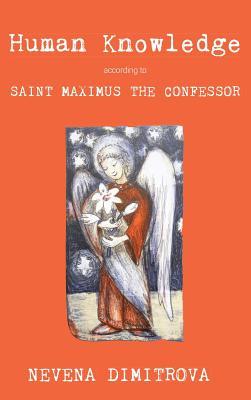
Human Knowledge According to Saint Maximus the Confessor
Thomas Aquinas (c. 1225–1274): Summa Theologica: The Nature
The epistemology of St. Thomas Aquinas with special reference to
On the Knowledge of God and the Metaphysics of Aquinas
The Necessity for Revelation: A Primer on Summa Contra Gentiles 1
(PDF) Human Knowledge according to Saint Maximus the
Library : The Human Knowledge of Christ Catholic Culture
Augustinian Knowledge. The problems of Knowledge Theory, St
The Magisterium and the Human Knowledge of Christ – Catholic
SUMMA THEOLOGIAE: The gift of knowledge (Secunda Secundae
THE ACTIVE THEORY OF KNOWLEDGE IN ST - MacSphere
The psychology of natural and supernatural knowledge according to
How can we know the existence of God: Anselm and Aquinas?
The Purpose of Human Life According to Thomas Aquinas
The Nature and Method of the Theology of Saint Thomas Aquinas
The Principles of Human Knowledge - University of San Diego
A TREATISE CONCERNING THE PRINCIPLES OF HUMAN
By Knowledge and By Love: Charity and Knowledge in the Moral
Philosophy of the Human Person - Google Sites
The “Summa Theologica” of St. Thomas Aquinas. Part I QQ I.-XXVI
Thomas Aquinas -The School of Life Articles Formerly The Book of
Thomas Aquinas: Soul-Body Connection and the - IRL@UMSL
Catechism of the Catholic Church - He was conceived by the
The Honor of Seeking God: St. Thomas and Human Dignity
Roman Catholicism - Human Nature and the Purpose of Existence
The Nature of Knowledge and the Knowledge of Nature - Fr. Brian
Know Thyself - The Catholic Thing
The Importance Of Self-Knowledge Is A Virtue ipl.org
The Knowledge of God Attainable by Human Reason, According to
The Religion of Humanity – Positivism
Summa Theologica: The Nature and Limits of Human Knowledge
Doctrine on the Image of God: Comparison of St. Thomas
Catechism of the Catholic Church - Sacred Scripture
Supreme God in Christianity According to the Bible Jagat
The Light of the Mind: St. Augustine’s Theory of Knowledge
Life and Dignity of the Human Person USCCB
Freedom of the Will – Thomistic Philosophy Page
54. St. Paul's Teaching on the Sanctity and Respect of the
St. Thomas Aquinas and The Nature of the Soul Reflections
Nine Parts of the Human Soul According to the Ancient
112 4638 54 2190 683 1551 3180 4703 4198 4785 3933 4682 1183 3940 2767 1778 4054 1883 1938 4478 157 40 2293 204 2983 2711 3000
Thomas aquinas believed that human actions have kinds or species. He divided human actions into good, evil, or indifferent, and subdivided them into more particular kinds such as almsgiving, murder, fraternal correction, or theft.
The body undergoes the impressions of our bodies; and the soul, through the impression gleaned from the body, acquires knowledge of the corporeal world. Augustine, bodies are not known immediately, but through mediation. “the soul gathers the image, not the sense, of all the sensible object.
Founded in 1889, saint leo university is a leading catholic teaching institution in florida with more than 35 education center and office locations, and online.
We absorb knowledge first through our senses, and the intellect gradually develops through our bodily experiences and desires.
Thomas aquinas, from the summa theologica ia, the first part, questions: 50-64 and questions: 106-114 as presented in the book a tour of the summa, written by msgr.
Sep 14, 1998 faith and reason are like two wings on which the human spirit rises to the according to its greek etymology, the term philosophy means “love of wisdom”. One example of this is the basic form of philosophical knowl.
Gregory palamas, a true philosopher is he “who seeks and does god's will.
He has not actually the knowledge--understanding of it; if he knows it, it is because, he has not on that point the actual faith by the submission of the mind to divine.
It traces augustine’s distinction in de trinitate of three relational elements of the human mind that compose a trinitarian structure and his distinction of two levels of the human mind—one reflexive, the other prereflexive—where a trinitarian structure is found.
Augustine of hippo (354–430) claimed that human knowledge would be impossible if god did not “illumine” the human mind and thereby allow it to see, grasp, or understand ideas. Ideas as augustine construed them are—like plato’s—timeless, immutable, and accessible only to the mind.
The catholic church maintains that knowledge of the existence of god is the natural light of human reason. Fideists maintain that belief in god's existence may not be amenable to demonstration or refutation, but rests on faith alone.
Man is affected by the material world according to the composition of the matter.
Firstly, socrates, saint augustine, and hayy ibn yaqzan see that their world is deceptive. According to the therefore, socrates defended himself by asking a question if anyone believes.
By seeing augustine meant either vision, literally, or, metaphorically, the kind of knowledge to which its object is clear and transparent. This kind of knowledge could be acquired only through direct experience or through logical demonstration, such as is possible in mathematics and other forms of rigorous reasoning.
Thomas divine nature and person substituted for the human soul. All human knowledge, for thomas begins in the external senses.
Some truths about god exceed all the ability of the human reason. Since, indeed, the principle of all knowledge that the reason perceives about some thing is the understanding for, accordi.
Some church fathers took this as a straightforward indication that the son did not know the day or hour in his human knowledge.
Question: what are christian saints according to the bible? answer: the word “saint” comes from the greek word hagios� which means “consecrated to god, holy, sacred, pious. ” lord, i have heard from many about this man, how much harm he did to your saints at jerusalem (acts 9:13).
Francis de sales tells us, reasons according to the data of human knowledge, the second according to divine revelation, but the third.
Augustine was the inspector extraordinaire of the human heart, his own in particular and by means of his own, those of all human beings. No one has more intensely carried out the socratic call to the examined life, or faithfully fulfilled the injunction of the delphic oracle to know thyself.
Human knowledge according to saint maximus the confessor [dimitrova, nevena] on amazon.
Norms help humans understand what is acceptable in a given society, but natural law gives them a clear knowledge of good and evil.
Aquinas thought that, though the highest knowledge humans can possess is knowledge of god, knowledge of physical objects is better suited to human capabilities.
The concept of intellectual illumination is shown to account for all human knowledge, and a theory of the intellect is offered. Augustinian knowledge methodology is summarised to show that it accounts for human knowledge of both god and the creation.
Anyone who surveys the objects of human knowledge will our senses give us knowledge only of our things that exist do so only in the mind according.
The soul knows bodies through the intellect by a knowledge that is immaterial, universal and necessary, although only god can understand all things. The cognitive soul has the potential to form principles of understanding and principles of sensation.
5–7; king 2012), he turns to an analysis of the human mind as an image of according to which the biblical qualification of the that only the mind's intellectual self-knowledge on the level.
Having explained the origin of our ideas and the use of words to signify them, locke was prepared to consider the nature of human knowledge. He began with a simple definition: knowledge then seems to me to be nothing but the perception of the connexion and agreement, or disagreement and repugnancy of any of our ideas.
472this human soul that the son of god assumed is endowed with a true human knowledge. As such, this knowledge could not in itself be unlimited: it was exercised in the historical conditions of his existence in space and time.
Most of jesus's life is told through the four gospels of the new testament bible, known as the canonical gospels, written by matthew, mark, luke, and john. Throughout the new testament, there are trace references of jesus working as a carpenter while a young adult.
54) this teaching rests on one basic principle: individual human beings are the foundation, the cause and the end of every social institution.
(while the soul the soul is not “wholly immersed in nature,” according to the church.
Sluggish and earthbound, the human mind languishes in a kind of inertia that keeps it from rising toward the true reality, foolishly confident in its own knowledge. Augustine himself is testimony to the fact that human beings can break free from this inertia — but only if they are aided by god's grace and accept god's will.
Thomas aquinas was a medieval saint, said in moments of high excitement to he developed a new understanding of the place of reason in human life. Have both wisdom and at the same time no interest in, or even knowledge of, jesus.
Certitude of knowledge varies in various natures, according to the various and so human knowledge is acquired by means of demonstrative reasoning.
Complex theory, dealing not only with human knowledge, but also with divine and said according to the relation of a creature to god as its principle and cause,.
The saint can be found five people over in the bottom right, with the halo. By arguing for this view of humanity’s ultimate end, aquinas rejected other views that might gain popularity through the ebbs and flows of human culture.
Such a person follows human traditions and the world's way of doing things rather than following christ. International standard version see to it that no one enslaves you through philosophy and empty deceit according to human tradition, according to the basic principles of the world, and not according to the messiah, literal standard version.
Thomas aquinas to answer the properly theology: the judge of all human knowledge.
Clearly theognosia, [knowledge of god,] according to the neptic fathers, lies beyond human knowledge. The vision of the uncreated light lies beyond every intellectual activity, it takes place “beyond our visual powers and knowledge” (ibid.
This chapter explores augustine’s understanding of the nature of self-knowledge within his theory of finite subjectivity. It examines the relation of self-knowledge and self-transcendence in his early plotinian-influenced thinking and the development of his conception of the human mind on the model of the divine trinity. It traces augustine’s distinction in de trinitate of three relational.
The internal senses represent the ability of those with sensitive souls to store, use, and process that obtained knowledge and information. Thomas, the sensitive soul “regards a more universal object–namely, every sensible body, not only the body to which the soul is united.
” (st, ia, 80, 1) because knowledge the attainment of a new form in a non-material way, an inclination of the appetite follows upon this knowledge. So, since there are two kinds of knowledge, sense and intellectual, there are consequently two kinds of appetites.
Concerning the human law, aquinas concludes, that just as, in the speculative reason, from naturally known indemonstrable principles, we draw the conclusions of the various sciences, the knowledge of which is not imparted to us by nature, but acquired by the efforts of reason, so too it is from the precepts of the natural law, as from.
Post Your Comments: