Download Why Do Pitcher Plants Eat Bugs?: And Other Odd Plant Adaptations - Brianna Battista file in ePub
Related searches:
3890 2637 1488 1483 3785 3605 4360 2583 3945 3173 114 4616
At 6 to 8 inches, they aren’t the largest north american pitcher plants, but colorful venation and fancy ruffled lids do their part to attract prey. Like other sarracenia� the lid is densely packed with downward-facing hairs to guide insects towards the open mouth.
Pitcher plant contains chlorophyll; hence it is capable of preparing its own food like green plants. But pitcher plant eats insects because it grows in swamps or bog areas where the soil is deficient in nitrogen mineral. So, just to fulfill its nitrogen requirement, it traps the insects and utilize their proteins.
The process begins by the pitcher bug eating plants giving off a vibrant pitcher color that attracts the insects from far and as they get closer the pitchers have a nectar that further helps attract the insect. As the insect reaches the peristome (larger thick ring at top of pitcher) it goes to eat the nectar and becomes stuck to the pitcher.
Carnivorous plants “eat” insects and small animals in order to supply the nutrients (including nitrogen, sulfur, and phosphorus) they need to survive. Here is a really cool video that explains the process by which venus flytraps capture their prey.
Pitcher plants and other carnivorous plants eat insects to consume proteins to augment the poor nitrogen content of the soil in which they grow.
Earwigs are quick, nocturnal insects that love places high in moisture. You can typically find them under rocks, in wet soil, mulch, or under logs. They eat plants and insects and are attracted to light, like many other insects.
These plants work a little differently than the others on this list. Rather than deterring bees and wasps, pitcher plants help control them. Pitcher plants are carnivorous, trapping and ingesting insects for their own nutrition. Insects are lured into the flower, within which a slippery surface causes them to fall into a pool of water and drown.
Meanwhile, pinguicula and drosera tend to catch flying insects like gnats, flies, and moths.
Firstly plants don't eat insects; they catch and digest them, there is no mechanical eating involved, although the teeth along the edge of a venus flytrap leaves often give rise to this notion.
Pitcher plants entice insects to their traps using a fragrant nectar. Any insects that encroach the trap are at risk from a ribbed, widely protruding rim known as the peristome. This is coated with a waxy film which when dry is not much of a threat, but after a period of rainfall the rim becomes covered with a film of water which confounds the surest of insect feet.
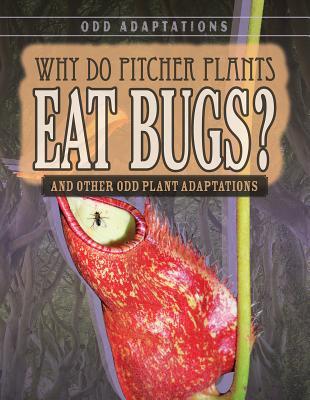
And other odd plant adaptations (odd adaptations) has 0 reviews and 0 ratings.
You're in good company, charles darwin raised a similar question 140 years ago, one of his particular interests was dionaea muscipula, a venus flytrap species.
Insect-eating plants also tend to thrive in sunny and moist habitats. Givnish thinks that’s because carnivory ultimately boosts photosynthesis abilities, a skill plants deploy best in bright and wet conditions.
Fredericksburg — what are pitcher plants and why do plants that grow in bogs and eat bugs matter? because it raises every kind of pitcher plant in the world, meadowview's nursery attracts.
And other odd plant adaptations (odd adaptations) [battista, brianna] on amazon.
The lower inside of the pitcher plant is filled with a thick liquid produced by the plant. When the creature can’t crawl back out, it drowns in this liquid. As the prey rots and falls apart, the plant soaks in the nutrients. Usually pitcher plants eat insects, but larger species may catch bigger things, such as rats and lizards. Don’t worry, they don’t grow big enough to catch kids for dinner!.
Short answer type question:pitcher plant has green leaves which can prepare food by photosynthesis then why does it eat insects?.
The insects living in the pitcher plants have a commensal relationship with the plant. What does benefit the plant is the bacteria that feed on the remnants left by the midges. The bacteria, along with other micro-organisms, break down the dead insects into components that can be absorbed by the plant.
Warning, bugs, watch out for carnivorous plants! most of us have seen or at least heard of plants that eat insects. There are others, including the pitcher plant, bladderwort, and sundew plant. Why do these plants eat bugs instead of using normal plant techniques? the problem is that these plants live in nutrient-poor soil.
An upper pitcher of nepenthes lowii, a tropical pitcher plant that supplements its carnivorous diet with tree shrew droppings. Carnivorous plants are plants that derive some or most of their nutrients from trapping and consuming animals or protozoans, typically insects and other arthropods.
Foraging, flying, or crawling insects such as flies are attracted to a cavity formed by the cupped leaf, often by visual lures such as anthocyanin pigments, and nectar.
Why does the pitcher plant feed on insects even though it produces food by photosynthesis? photosynthesis produces sugar that can be processed to starch and cellulose. Plants also need nitrogen and minerals, pitcher plants live in regions low in nitrogen and minerals which is why they consume insects.
Most plants get their energy through photosynthesis meaning they just need the gasses in the air, water from the soil, and some sunlight, so why do venus flytraps eat insects? well, it turns out that venus flytraps actually get a good deal of energy in the same way that other plants do, through photosynthesis.
The plant “evolved” because it has found that eating small insects could give it the necessary proteins, nitrogen and other minerals that it couldn’t just seep from the soil.
I have already mentioned insects that live inside the pitcher fluid and probably benefit the plant. But there are also insects that live inside the pitchers, above the fluid line, and damage them by feasting upon their tissues. The larvae of three species of exyra moths eat the pitcher walls, causing the top of the pitcher to topple over.
Pitcher plant, any carnivorous plant with pitcher-shaped leaves that form a passive pitfall trap. Pitcher plants are found in a wide range of habitats with poor soil conditions and rely on carnivory to obtain nutrients such as nitrogen and phosphorus.
They catch and feed insects to fulfil their need of nitrogen. Pitcher plant, venus fly trap, butter wort and bladder wort are the examples of insectivorous plants.
Why do they eat insects and other animals? the reason is that these plants exist in rocky areas or bogs, where the soil quality is very poor and lacks essential nutrients such as nitrogen. To fulfill their energy requirements the plants consume insects and other small animals.
Because the pitcher plant may dine on the helpful bugs! if that’s not bad enough, pitcher plants are sensitive to chemicals. Even non-toxic insecticidal soap spray may damage (or kill) pitcher plants.
Like all other plants, carnivorous plants depend on photosynthesis for some if its food (sugar) as well as carbon dioxide. So, why eat bugs? if they get food through photosynthesis, why do they need bugs or frogs to eat? carnivorous plants get nitrogen, phosphorus, and calcium from their unique diet.
Some species of bug eating plants such as venus fly traps and pitcher plants require periods of dormancy during the winter months; move these plants to cool location where the temperature remains between 45 to 55 degrees fahrenheit and allow the plant to rest. After a few months and as spring approaches, move the plant back to its sunny location.
Since nitrogen is essential for all living things, the plants must have an alternate way to acquire the element. Carnivorous plants “eat” insects and small animals in order to supply the nutrients (including nitrogen, sulfur, and phosphorus) they need to survive.
In order to live in poor soil conditions, many plants have invented some fabulous and bizarre adaptations to help them survive: carnivory, the eating of animal flesh, is one of them, and it has been found to exist in at least nine plant families and about 600 species.
Scientists are saying this because the leaves are wax-coated and encourage bugs to fall off of them into their water-filled pitchers (similar to pitcher plants). Whether it’s by discovering new carnivorous species that already exist, or seeing plants evolve to become carnivorous, these types of plants aren’t going anywhere anytime soon.
The carnivorous plants in these cases have usually been nepenthes (the tropical pitcher plant), but these are rare surprises and do not represent normal prey (any rat or bird that could not struggle, gnaw, or peck its way out of a nepenthes pitcher is probably sick or near death from other causes).
Most of these species flourish in places where soil nutrients, and nitrogen in particular, are scarce — such as the sandstone plateaus in venezuela. The need to find unconventional sources of nutrients likely drove carnivorous plant evolution in the first place, givnish says. Insect-eating plants also tend to thrive in sunny and moist habitats.
Pitcher plants are called pitcher plants because they have 'pitchers' at the ends of their stems. The pitcher has digestive fluid in it with a sweet smell that attracts insects.
Why do bugs keep eating your plants? bugs eat your plants because they’re hungry and your plants are likely the best option around at the moment. While it’s unfortunate for you as the gardener, it’s also easy enough to understand why it happens. Bugs are like any other living creature, and they’re usually just looking for their next meal.
Pitcher plants are carnivorous, and they have pitcher-like structures to trap prey. How do these plants trap their prey? unlike animals, plants do not move around, and they don't have limbs, mouth, or sharp teeth to catch prey. Carnivorous plants have some special trapping mechanisms, which are adaptations that help them thrive in poor soil.
Pitcher plant ( carnivorous / insectivorous )plant carries out photosynthesis. However, it traps and eats insects to meet its requirements for certain nutrients that are not present in the environment where it grows.
Pincher bugs are omnivores, meaning they’ll eat pretty much anything that’s made available to them. In the garden, they primarily feed on dead or decaying plant and animal matter. However, they will also readily prey on aphids� insect eggs, maggots� grubs, and army worms.
Insects and other prey are attracted to the mouth of the pitcher by a trail of nectar-secreting glands that extend downward along the lip to the interior of the pitcher. The throat of the pitcher, just below the lip, is very smooth and sends the animal tumbling down into the liquid pool at the bottom of the pitcher, where it drowns.
Pinguicula carnivorous plants, more popularly known as the butterworts, is a species of carnivorous plants that employ their sticky, glandular leaves to entice, trap, and absorb insects to compensate for the meager mineral nutrition they get from the environments.
Why? because we're sure they can't eat us unless we willingly feed them pieces of our flesh.
“carnivorous pitcher plants eat a diet of certain spiders, regardless of what's on the menu.
When the insects arrive to feast, they slide into the pitcher’s deadly pool.
Pitcher plants eat insects because these plants need more nitrogen for survive and this requirement can not be completed by soil.
Most carnivorous plants eat flying, foraging, or crawling insects. Those that live in or around water capture very small aquatic prey like mosquito larvae and tiny fish. On rare occasions, some tropical carnivorous plants have even been reported to capture frogs, or even rats and birds (although these creatures were probably sick or already near death)!.
The pitcher plant is green in colour and can make their own food by the process of photosynthesis� but they grow in the soil which lags nitrogen� to fulfil their requirement of nitrogen they eat insects� they can be called as partial hetrotrophs.
Carnivorous plants are plants that derive some or most of their nutrients from trapping and consuming animals or protozoans, typically insects and other.
Feeding on insects gives them a boost to be able to grow more quickly. Here are the names of 5 more insectivorous plants (latin name first followed by the common name): 1) sarracenia - north.
Sundew and pitcher plant� feed on insects because the soil in which they grow is poor in nutrients and they have developed mechanisms to trap and eat insects for their need of nutrients.
Favourite answer the insectivorous plants like pitcher plant often grow in places where they do not get enough nitrogen. Photosynthesis fulfills the need of energy but nitrogen is supplied through.
Pitcher plants eat insects by luring them into a specialized, cylindrical leaf (the pitcher) using a combination of nectar, sweet scent, and conspicuous coloration. The pitcher is an amazing structure that is able to catch insects with no moving parts.
Post Your Comments: