Download Chondrules: Records of Protoplanetary Disk Processes (Cambridge Planetary Science Book 22) - Sara S Russell file in PDF
Related searches:
3146 2230 3876 126 4143 579 1658 3827 2239 1262 3278 3966 14 1474 2136 2883 4952 2536 2499 2411 4226 4103 2591 1372 3163 4060 1602 4366 1449 789 2585 634 2100 4713 378 2666 4167 3655
The high partial pressures of lithophile elements require large dense clouds, either clumps in the protoplanetary disk, impact.
Chondrules are submillimeter- to centimeter-sized silicate spherules that formed in the protoplanetary disk by thermal processing of preexisting nebular dust.
Ch metal-rich carbonaceous chondrites represent a mixture of the cb-like materials (magnesian skeletal olivine and cryptocrystalline chondrules and uniformly 16 o-depleted igneous cais) formed in an impact plume and the typical chondritic materials (magnesian, ferroan, and al-rich porphyritic chondrules, uniformly 16 o-rich cais, and chondritic lithic clasts) that appear to have largely predated the impact plume event. We conclude that there are multiple mechanisms of transient heating.
Oct 12, 2016 the motion of chondrules and other particles in a protoplanetary disc with temperature fluctuations.
Chondrules and calcium-aluminum-rich inclusions (cai), which are the major components of chondritic meteorites, provide an important record of heating events in the protoplanetary disk.
Abstract chondrules are ∼1-mm igneous droplets in primitive meteorites, and their abundance suggests widespread melting in the protoplanetary disk. Chondrules with relict unmelted grains or igneous rims record multi111ple melting events. There are two main types of chondrules, type i (feo-poor and volatile-poor) and type ii [feo-rich and approximately chondritic (solar) in composition].
Issued respectively by john fahey's takoma record label in 1980 and leon's arbitor private press in 1982, nommos and visiting.
The famous “bones brigade” skate team, featuring tony hawk, steve caballero, mike mcgill, lance mountain and tommy guerrero, goes on a search for master.
Chondrules — ubiquitous chondritic solids tracking the evolution of the solar protoplanetary disk [#2024] the only record of our solar system’s formation comes from mm- to cm-sized calcium-aluminium-rich.
If chondrules were melted by nebular lightning, it is unclear what paleofields they would record.
Feb 16, 2015 “it's amazing that these arboreal adaptions occurred so early in the history of mammals, and shows that at least some extinct mammalian relatives.
Chondrules are spherical silicate grains which formed from protoplanetary disk material, and as such provide an important record of the conditions of the solar system in pre-planetary times. Chondrules are a major constituent in chondritic meteorites, however despite being recognized for over 200 years, their origins remain enigmatic.
The mineralogical, chemical and isotopic records of chondrules are therefore considered as direct tracers of processes in the protoplanetary disk that played decisive roles in the formation and evolution of the early solar system.
Aug 24, 2012 yet it is a highly complex record that centuries of work and highly origin of the chondrules that distinguish the meteorites from other materials,.
Chondrules form as molten or partially molten droplets in space before being accreted to their parent asteroids. Because chondrites represent one of the oldest solid materials within the solar system and are believed to be the building blocks of the planetary system, it follows that an understanding of the formation of chondrules is important to understand the initial development of the planetary system.
The majority of chondrules formed 1-3 myr after calcium aluminum inclusions (cais), another component.
Early scattering of the solar protoplanetary disk recorded in meteoritic chondrules yves marrocchi,1* marc chaussidon,2 laurette piani,3 guy libourel4 meteoritic chondrules are submillimeter.
Collectively, cais and chondrules provide time-sequenced samples allowing us to probe the composition of the disk material that accreted to form planetesimals and planets.
Chondrules are silicate spheroids found in meteorites, and they serve as important fossil records of the early solar system. In order to form chondrules, chondrule precursors must be heated to temperatures much higher than the typical conditions in the current asteroid belt.
Chondrules are the millimeter-scale previously molten droplets found in chondritic meteorites. These pervasive yet enigmatic particles hint at energetic processes at work in the nascent solar system. Chondrules and chondrites are well studied and many of the details about their compositions, ages, and thermal histories are well known.
Sara samantha russell (born 1966) is a professor of planetary sciences and leader of the planetary materials group at the natural history museum, london. She is a fellow of the meteoritical society and of the royal astronomical society.
A chondrite is a stony meteorite that had been modified because of the melting of the parent body.
Chondrules in enstatite chondrites emmanuel jacquet, laurette piani, michael weisberg to cite this version: emmanuel jacquet, laurette piani, michael weisberg.
Chondrules, millimeter-sized igneous spherules comprising the major component of most chondritic meteorites, formed during the first 4 million to 5 million years of the evolution of the solar.
Chondrules chondrules are sub-millimetre spherical metal-sulphide-silicate objects which formed from the solar protoplanetary disk material, and as such provide an important record of the chronology and conditions of the solar system in pre-planetary times.
Chondrules are sub-millimetre spherical metal-sulphide-silicate objects which formed from the solar protoplanetary disk material, and as such provide an important record of the chronology and conditions of the solar system in pre-planetary times.
Chondrules are spherical silicate grains which formed from protoplanetary disk material, and as such provide an important record of the conditions of the solar system in pre-planetary times. Chondrules are a major constituent in chondritic meteorites, however despite being recognised for over 200 years, their origins remain enigmatic.
These complex objects have been the subject of intense study in an attempt to decipher their origins and, in turn, use them as records of the dynamics of the protoplanetary disk that led to the formation of the solar system ( 1–8).
Chondrules, which are roughly millimeter-sized silicate-rich spherules, dominate the most primitive meteorites, the chondrites.
Mar 21, 2005 see the following link of my 226g nwa with a big chondrule. The neat thing is there are a number (about 10) of exposed chondrules.
Meteoritic chondrules are submillimeter spherules representing the major constituent of nondifferentiated planetesimals formed in the solar protoplanetary disk.
Abstractmajor advances in deciphering the record of nebula processes in chondrites can be attributed to analytical improvements that allow coordinated isotopic.
Abstract ▪ abstract chondrules are ∼1-mm igneous droplets in primitive meteorites, and their abundance suggests widespread melting in the protoplanetary disk. Chondrules with relict unmelted grains or igneous rims record multi111ple melting events.
Sep 30, 2016 understanding the thermal history of chondrules includes defining their how molten chondrules remained stable within a protoplanetary disk.
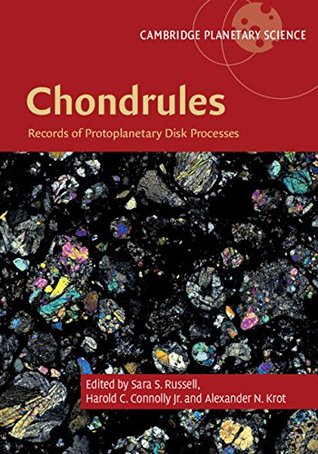
Early scattering of the solar protoplanetary disk recorded in meteoritic chondrules. Current ideas and evidence about the formation of chondrules in the disk of gas and solids that became our planetary system are covered in this, the most comprehensive and up-to-date review, compiled by collaborating experts from 9 countries.
Here, i summarize recent results on the mineralogy, petrology, oxygen, and aluminum‐magnesium isotope systematics of the chondritic components (mainly cais in carbonaceous chondrites) and their significance for understanding processes in the protoplanetary disk (ppd) and on chondrite parent asteroids.
Chondritic meteorites, and especially the most volatile-rich chondrites, the carbonaceous chondrites, preserve a record of the solar protoplanetary disk dust.
Post Your Comments: